You can almost feel the calm when Table Rock Lake comes into view. If you are thinking about buying lakefront in Kimberling City, the process is different from a typical neighborhood home. Docks, permits, shoreline rules, and flood risk all play a role. This guide walks you through what to know, from ownership and access to financing, insurance, inspections, and a step-by-step plan to buy with confidence. Let’s dive in.
Lakefront ownership 101 in Kimberling City
Kimberling City sits in Stone County on the north and northeast shores of Table Rock Lake. Properties can be inside the city limits or in unincorporated Stone County, and the permitting rules differ based on location. The lake itself is a federal reservoir that the U.S. Army Corps of Engineers manages, including land below the authorized project boundary.
On many parcels, private ownership ends at or near that Corps project boundary or high-water line. Land and water below that line are typically under federal control. Your rights to use the water and shoreline depend on deed language and recorded documents, so you should not assume unrestricted use without verification.
Shoreline management and permits
Shoreline work often requires approval from multiple agencies. Activities like erosion control, riprap, seawalls, vegetation removal, and grading commonly need permits. In some areas, natural vegetation buffers are encouraged or required to protect the shoreline and habitat.
Seasonal lake level changes affect usable shoreline, dock clearance, and access. These fluctuations are tied to Corps operations for flood control, power generation, and recreation. If a neighborhood offers shared beaches or community shoreline paths, confirm your access rights and any maintenance obligations.
Docks and USACE permits
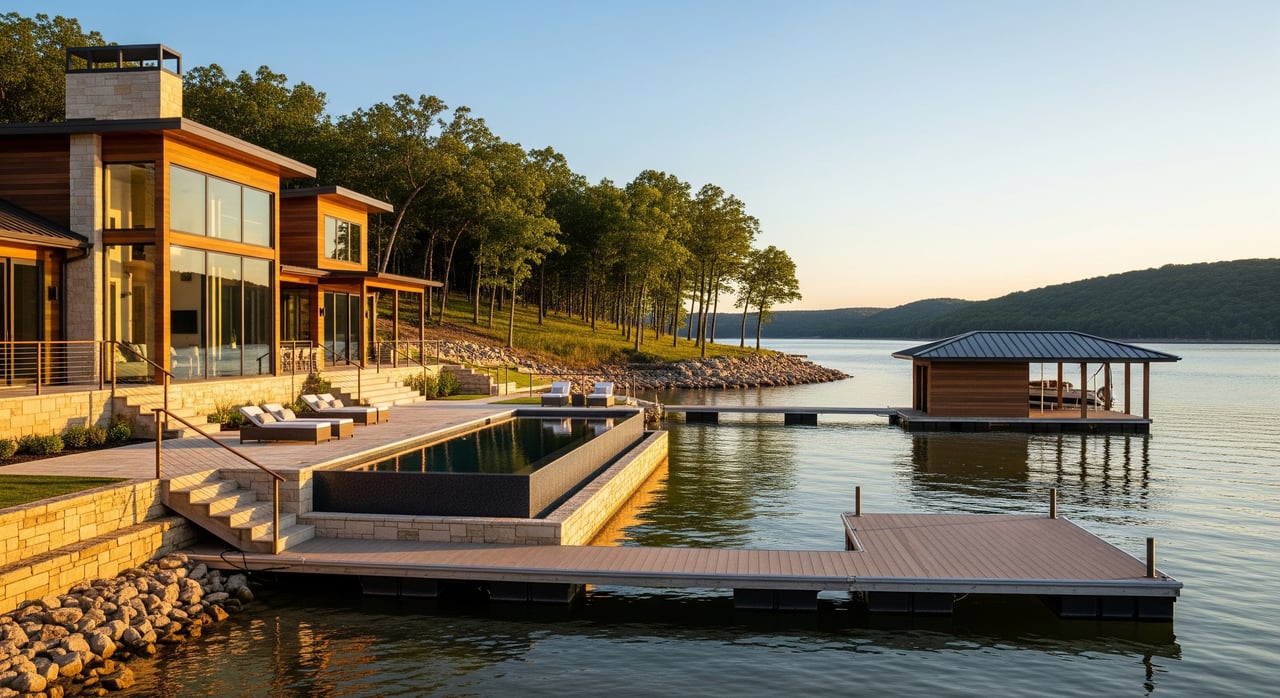
Private docks and in-water structures on Table Rock Lake generally require authorization from the Corps. Permit conditions can include size and footprint limits, distance from navigation channels, and placement to protect habitat and public use. Some permits have rules for seasonal removal, upkeep, or safety.
If a property already has a dock, verify the permit status and whether it transfers to you. Some docks are grandfathered only if documentation is clear and current. Docks must also avoid impeding navigation and neighboring use, so placement matters when you plan upgrades or a new structure.
Water access options
You will see several access types around Kimberling City. Understanding what you are buying reduces surprises after closing.
- Deeded private waterfront to the project boundary: direct shoreline access is most convenient for daily use.
- Deeded water access through an easement or path: access is limited to specific points rather than continuous frontage.
- Community or HOA docks, ramps, or beaches: governed by association rules and shared maintenance.
- Public access only via marinas or ramps: no private access beyond public facilities.
How to confirm your access rights
- Review the deed, plat, and any recorded easements for access language.
- Ask for HOA or POA documents if amenities are shared.
- Include a title review and survey to confirm boundaries and rights.
Lifestyle and practical considerations
Boating traffic, wake, and weekend or holiday congestion can affect comfort and safety. Proximity to marinas and public ramps can add convenience but may increase activity near your shoreline. Choose a dock type that fits local depth and exposure, and budget for ongoing maintenance.
Many lake homes use private septic systems and wells. Confirm septic capacity, maintenance history, and county health compliance. Steep access roads and driveways are common around the lake, so check for erosion control and winter access considerations.
Financing and insurance for lake homes
Lakefront purchases often involve second-home or investment financing. Rates, down payments, and underwriting vary by use. Be ready to document your plan for personal use or any rental plans, since that can change how lenders qualify the loan.
Second home vs investment property
- Primary residence loans typically offer the lowest rates and down payment options.
- Second or vacation homes usually require stronger credit and a larger down payment, often at least 10 percent, though terms vary by lender.
- Investment properties generally require higher down payments, higher rates, and stricter qualifying ratios. If you plan to rent, some lenders consider documented rental history or a management agreement.
Insurance and flood considerations
Homeowners insurance may cost more near the water due to exposure and access. If the home sits in a FEMA Special Flood Hazard Area, flood insurance is required by lenders. Even outside those zones, many lakefront owners choose coverage due to water-related risk. You can also ask about wind or hail endorsements, sewer backup coverage, and options for dock or boat protection.
Inspections, surveys, and shoreline due diligence
Waterfront deals benefit from deeper inspection and documentation. The goal is to confirm what you own, where you can build, and how you can use the shoreline.
Title and survey
Order an updated ALTA or land survey that shows the lot lines in relation to the Corps project boundary. Include any improvements like docks, seawalls, and retaining walls. Ask your title company to search for easements, covenants, riparian rights, dock permits, and any encroachments.
Septic and well
Request a septic system inspection, maintenance records, and any approvals required by the county health department. If the property uses a private well, complete water-quality testing for bacteria, nitrates, hardness, and iron.
Dock and shoreline compliance
Have the dock and any shoreline structures inspected for safety and condition. Verify the dock’s permit status with the Corps and confirm whether the permit transfers. Check for completed or required shoreline stabilization projects and make sure permits were obtained for past work.
Your step-by-step buying plan
A focused plan helps you move quickly while protecting your interests. Use this checklist to structure your search and offer.
Pre-offer checks
- Confirm whether the property is inside Kimberling City limits or in unincorporated Stone County since permits and codes differ.
- Call the Corps project office to confirm the project boundary, dock permit status, and any known restrictions.
- Request a preliminary title report to surface easements, access rights, and recorded shoreline agreements.
- Complete a basic flood zone check and ask for any existing elevation certificates.
Smart contingencies to include
- Survey contingency to confirm boundaries versus Corps lands and to identify encroachments.
- Septic inspection plus county health approval.
- Well testing for potable water.
- Dock and shoreline permit verification to confirm transferability or needed remediation.
- Full home and structural inspections, including foundation, roof, slope, and retaining walls.
Key questions to ask
- Does the deed include shoreline or only access easements, and are there HOA or POA rules that affect use?
- Is the current dock permitted and transferrable, and have permits been obtained for any shoreline work?
- What are typical insurance premiums and is the property in a high-risk flood zone?
- Are there recurring fees for docks, launches, or lake associations?
Build your local team
- U.S. Army Corps of Engineers Table Rock project office for shoreline and dock permits.
- Stone County offices, including the Recorder, Assessor, Health Department, and Planning and Building.
- Kimberling City planning and building if the property is inside city limits.
- A title company and lenders familiar with second homes and waterfront underwriting.
- Licensed inspectors for septic, well, docks, and general home systems.
Wrapping up, buying lakefront in Kimberling City is an incredible lifestyle choice when you match the dream to the details. With clear ownership, the right permits, and a thorough inspection plan, you can enjoy the water with confidence. If you want a local, full-service partner who can coordinate the moving pieces and keep your interests first, talk with Jeff Pratt.
FAQs
Who controls Table Rock Lake shoreline near Kimberling City?
- The U.S. Army Corps of Engineers manages land and water below the authorized project boundary, and private ownership typically ends at or near that line.
Can you add or replace a private dock on Table Rock Lake near Kimberling City?
- It is possible with the required Corps authorization and any local permits, and existing docks may transfer if documentation is current and rules are met.
Do you need flood insurance for a Kimberling City lakefront home?
- Lenders require flood insurance if the home is in a FEMA Special Flood Hazard Area, and many owners choose coverage even outside those zones due to water risk.
How are loans different for a Kimberling City second home on the lake?
- Second homes usually need larger down payments and stronger credit than primary residences, and investment use often triggers higher down payments and stricter terms.
What ongoing costs should Kimberling City lakefront buyers expect?
- Expect higher insurance than some non-waterfront homes, potential HOA or shared facility dues, dock maintenance, and possible assessments for shoreline projects.
What inspections are recommended for Table Rock Lake properties in Stone County?
- Include a full home inspection, ALTA or land survey, septic and well checks, flood zone review, and a dock and shoreline permit verification with the Corps.